
An Alabama WE CAN AFFORD - Lower Costs, Stronger PUBLIC Schools, Real Healthcare
〰️
An Alabama WE CAN AFFORD - Lower Costs, Stronger PUBLIC Schools, Real Healthcare 〰️
My Priorities
-
✔ Lower costs, Higher Wages.
Families are squeezed by rising:
✔ Utility bills
✔ Groceries
✔ Insurance premiums
✔ Housing costs
✔ Property taxes
-
✔ Fully funded education for every child in House District 4.
✔ Supporting teachers and classrooms.
✔ Workforce development & career technical education.
✔ Partnerships with local universities and industry
-
✔ Affordable healthcare - a necessity, not a luxury.
✔ Expanding access to affordable coverage
✔ Lowering prescription drug costs
✔ Protecting rural hospitals
✔ Strengthening mental health services
✔ Healthcare should not bankrupt families.
-
✔ Voting rights and equal citizenship not second-class citizens.
✔ Protect voting rights
✔ Defend equal protection under the law
✔ Oppose efforts to strip lawful citizens of rights
✔ Safeguard individual freedoms
✔ Rights should not depend on party labels.
-
Veterans Affairs: Accountability and Real Access to Care
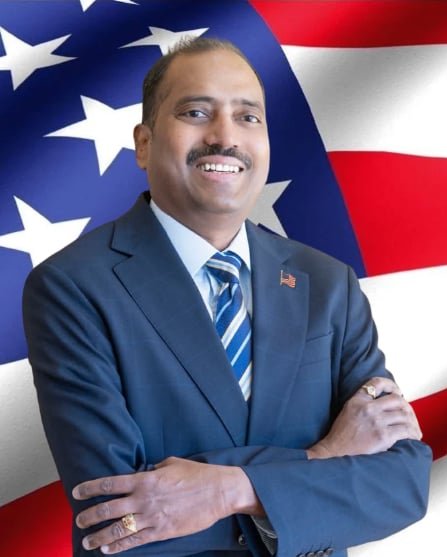
A policy position from Hanu Karlapalem, Democratic candidate for Alabama House District 4
Overview
Alabama is home to more than 400,000 veterans, including tens of thousands across Limestone, Morgan, and Madison counties. Honoring their service means more than ceremonies and monuments — it means an accountable state agency and real access to care close to home. Right now, Alabama falls short on both.
The Problem
Accountability at ADVA
In October 2024, the State Board of Veterans Affairs — the veteran representatives statutorily responsible for overseeing the Alabama Department of Veterans Affairs (ADVA) — voted to retain then-Commissioner Kent Davis for the remainder of the year. Less than an hour later, Governor Ivey overrode that vote and fired him anyway, citing what her office called the governor's “supreme executive power.” The dispute traced back to Davis's push to direct federal ARPA funds and opioid-settlement dollars toward veteran mental health treatment grants, and to an ethics complaint he had filed against a member of the governor's cabinet.
Source: reporting on the October 2024 State Board of Veterans Affairs vote, Governor Ivey's override, and the underlying ARPA/mental-health funding dispute (AL.com; Alabama Reflector; Alabama Political Reporter, June 2025).
In March 2025, the legislature passed Senate Bill 67 (SB67), which restructured the agency: the commissioner became a governor-appointed, cabinet-level position, and the State Board of Veterans Affairs — the same board that had just voted to keep its own commissioner — was reduced to an advisory role. The bill, carried by Sen. Andrew Jones and Rep. Ed Oliver, was fiercely contested when first introduced — at one hearing, nine veterans spoke against it and none spoke in favor. After months of amendments addressing veterans' concerns about board composition, the final version won the endorsement of the VFW, American Legion, and AMVETS. Even so, the dispute that produced this bill started with a governor overriding veterans' own board on a personnel decision — and that's the deeper problem this proposal is meant to address, regardless of how the resulting legislation was ultimately received.
Source: Alabama Political Reporter and Alabama Reflector coverage of the 2025 ADVA restructuring.
Davis later sued Governor Ivey over his removal. In September 2026, a federal judge ruled that Davis's core due-process claim — that the pre-termination hearing was a sham because Ivey had already decided to fire him — should proceed in Alabama state court rather than federal court, since state courts have the authority to order a new, fair hearing. Several other claims, including monetary damages against Ivey personally, were dismissed on sovereign immunity grounds. Whatever the legal outcome, the episode illustrates how much authority over veterans' care now sits with the governor's office rather than with veterans' own elected representatives on the board.
What Veterans in HD4 Are Experiencing
Talk to any veteran in HD4 and you'll hear a version of the same story: appointments that take months to schedule, confusion about what's covered, having to switch doctors mid-treatment because a provider stopped accepting VA coverage. The staff at the Huntsville VA clinic are good people, but they're stretched thin — and some of their own doctors have started recommending veterans seek care outside the VA system entirely just to be seen in time.
That's the federal VA, not ADVA — a different agency, a different fight. But it's exactly why ADVA's role matters. The state agency exists to help veterans navigate that maze: file claims, find community-care providers who actually take VA coverage, get answers when the federal system stalls.
It's telling that even close advisors to this campaign — veterans and veteran advocates themselves — don't have full visibility into how ADVA performs day to day. That's not because they aren't paying attention. It's because the agency doesn't make that information easy to find.
A Care Gap in North Alabama
That same fight over veteran mental health funding is directly tied to the care gap that follows. Alabama already has more than one model that works: Operation VETS ("The Shoulder") in Mobile and Spanish Fort, Vets Recover — a veteran-founded continuum of care now led by CEO Kent Davis, the former ADVA commissioner himself — also in Mobile, and Client Care Continuum, a residential PTSD and dual-diagnosis facility for military personnel in Arley. None of the three operates anywhere near North Alabama.
Meanwhile, the behavioral health providers that do serve Madison, Limestone, and Morgan counties are overwhelmingly private-equity or corporate-owned, general-population facilities — not veteran-specific care. Bradford Health Services (Madison and Huntsville) is owned by Lee Equity Partners, a New York private equity firm. Pathway Healthcare (Huntsville and Athens) is owned by Garden City Equity. Unity Psychiatric Care, a 20-bed Huntsville psychiatric hospital, is a division of Tennessee-based American Health Partners. Alabama's Certificate of Need law — which requires state approval before new facilities or treatment beds can open — makes it harder for a veteran-specific alternative to break into a market these providers already dominate.
What does exist for veterans in North Alabama: the Birmingham VA's outpatient clinic in Huntsville, the Floyd E. "Tut" Fann State Veterans Home (one of five ADVA oversees statewide), general mental health infrastructure through the Mental Health Center of North Central Alabama, and a Veterans' Outreach office in Hartselle limited to claims and benefits navigation — not clinical treatment. None of this is a substitute for a dedicated, veteran-specific treatment option.
Source: Alabama Department of Mental Health program listings; Bradford Health Services and Birmingham VA Medical Center service area information; va.alabama.gov state veterans homes directory.
Federal Delegation & the Missed VA Hospital
In 2022, the VA's own Asset and Infrastructure Review (AIR) recommended building a new, full-service VA medical center in Huntsville — a real chance at the hospital North Alabama veterans have gone without for decades. That plan died a few months later, in June 2022, when a bipartisan group of ten U.S. senators — none from Alabama — announced they would block Senate confirmation of the AIR Commission nominees, halting the entire review process before it could hold a single hearing. Then-Senators Richard Shelby and Tommy Tuberville did not join that group, but there is also no public record of them opposing the block or pushing to revive the Huntsville recommendation through any other channel in the years since. North Alabama veterans are still waiting for the hospital the VA itself said they should have.
The Ask
Repeal SB67 and restore the State Board of Veterans Affairs' decision-making authority — including its say over ADVA leadership — so a board of veterans representing every branch and region can't be overridden by the governor's office alone.
Require ADVA to publicly report VSO claims turnaround times by county, so families can see whether the state is keeping up.
Study extending a program modeled on Operation VETS to North Alabama, where thousands of veterans currently have no veteran-specific treatment option within reasonable driving distance.
Review and reform Alabama's Certificate of Need process as it applies to veteran-specific treatment facilities, so that expanding access in underserved regions isn't blocked by rules designed to protect existing providers. and local monopolies.
Where I Stand
Alabama's veterans didn't serve so the state could get away with symbolism. A cemetery honors a promise kept at the end of life — but the same seriousness has to apply while veterans are still here, navigating claims, seeking treatment, and depending on a state agency that answers to them, not just to whoever appointed it.
-
Why this matters
Nurses care for us on our hardest days. In October, the Alabama Board of Nursing announced that a ransomware attack on its systems may have exposed the personal and medical information of nurses, license applicants, and members of the public. The Board covers more than 97,000 licensed nurses.
I am a small technology business owner with knowledge of cybersecurity and information systems. I know how hard it is to defend against ransomware, and I know that what happens in the weeks after a breach matters as much as the attack itself. I once held a state license myself, so I know how much sensitive information these agencies keep on the people they license. The people whose information was taken deserve answers, protection, and a state government that learns from this.
What we know so far
• August: Investigators identified suspicious activity in the Board's systems.
• September 1: Malicious activity was confirmed. The Board posted notices in September that a cybersecurity event had disrupted its services.
• October 2: The Board said for the first time that some data was collected and downloaded and that sensitive personal and health information may have been exposed, including names, dates of birth, Social Security numbers, driver's license numbers, professional licensing information, and medical information.
• Still unknown: The Board has not said how many people are affected. It has said investigators could not establish definitively whether every person's information was fully accessed.
• Licensing: The Board has resumed online renewals for single-state RN licenses on a new system. Other applications are still on paper. Check the Board's website for the current renewal deadline.
What I will fight for
1. Direct notice, with a deadline. Anyone whose information a state agency may have lost should be told directly and promptly, not only through a notice on a website. Alabama should set a firm deadline.
2. Free credit monitoring and identity protection. When the state loses your information, the state should pay to protect you. The Board has so far only suggested that people consider outside providers. Families are already stretched thin. A breach at a state agency should not turn into a new monthly bill for the nurses whose information was taken.
3. A public accounting. Once investigators allow it, the public should learn what was taken, how many people were affected, and what went wrong.
4. Renewal protection. No nurse should lose the ability to work, or pay a late fee, because a state agency's systems were down. The Board should make sure no license lapses because of the breach and extend the renewal deadline if nurses need more time.
5. Real security standards for state agencies. Multifactor authentication across state agencies, regular independent security reviews of licensing boards, and state funding to match federal cybersecurity grants, so Alabama finds weaknesses before criminals do.
6. Accountability for vendors. Agencies and hospitals hand sensitive records to outside vendors. They should be required to manage that risk and to tell people quickly when a vendor is breached.
What I can do in the Legislature
A candidate cannot sponsor a bill until sworn in. If I am elected, I will push for a hearing on this breach, ask the Board and the state's technology office what went wrong and what has been fixed, and work on legislation to put these protections into law. I will also work to make sure the state pays for protection when it is the state's system that fails.
If you are a nurse or applicant
• Be alert to unexpected emails, texts, or calls about your license, fees, credit, or this incident. The Board says it will not ask anyone for account credentials or passwords by email, text, or unsolicited phone call.
• Know the impersonation red flags: The Board says scammers have impersonated its staff for quite some time and that there is no indication this is related to the cybersecurity incident. They can spoof phone numbers and forge documents. No Board employee will tell you to keep an investigation secret or demand immediate payment of a fee or fine, and a real investigation begins with a written Notice of Investigation. If someone contacts you, note their information, do not pay or share personal information, and email abn@abn.alabama.gov.
• Do not click unexpected links, open unverified attachments, or give out personal information.
• Use strong, unique passwords and turn on multifactor authentication for email, financial, healthcare, and employment accounts.
• Watch your bank accounts and identity-related activity, and consider a credit freeze or fraud alert. Report any unauthorized transaction that may be identity theft right away.
• Questions for the Board: cybersecurityevent@abn.alabama.gov, or 1-800-656-5318, Monday through Friday, 8:00 AM to 4:30 PM.
An Alabama We Can Afford: Lower Costs. Stronger Public Schools. Real Healthcare.
Sources: Alabama Board of Nursing news release and website; Alabama Political Reporter, October 6, 2026; Fox10, October 20, 2026; GovTech, October 22, 2026.
-
One place in House District 4 to start something, learn a trade, and build a life here.
The problem
Too many of our young people, skilled workers, and small business owners leave North Alabama because there is no affordable path to start a business, get trained, or build a career close to home. Office space costs too much. Training is too far away. Veterans and retirees are left to figure it out alone. And when big projects do come, the deals are too often made behind closed doors.
I know this from my own life. I have spent more than 18 years building a technology company in Madison. Finding affordable space, people, and support was harder than it should have been. It should not take a decade to find your footing in your own hometown.
The idea
The Affordable Campus is a community and economic development initiative built on a public-private partnership. It is not a government handout. It gives every city and community in House District 4 the chance to compete for affordable, multi-use space that serves small businesses, nonprofits, students, veterans, and working families.
It will be built in HD4. Communities across Morgan, Limestone, and Madison counties will compete to host it, and the site will be chosen in the open, based on documented community need and readiness.
What it will include
• Start something. Co-working spaces and a small business incubator, so local entrepreneurs have an affordable place to launch without leaving the district.
• Learn a trade or a craft. Vocational and trade schools, plus a lifelong learning center for retirees and working adults building new skills.
• Serve those who served. A veterans support center that meets the needs of our veteran community directly.
• Build community infrastructure. A multi-purpose conference and event center, affordable office space for nonprofits priced out of commercial rent, and tutoring facilities for students who need support beyond the classroom.
• Connect globally. A Global Center for international trade and multicultural organizations, so our region can compete for business and welcome the world.
Ten years in the making
This idea did not start with this campaign. It began as Start Up Madison, a phased public-private innovation complex I proposed during my 2016 run for Madison mayor, modeled on Philadelphia's StartUp PHL initiative. Over the past decade it has grown from a single-city proposal into a model built for all of House District 4.
-
Parents should not have to choose between a paycheck and a safe place for their kids.
The problem
Good childcare is expensive, hard to find, and often too far from home or work. When families cannot find it, one parent steps back from a job, a small business loses a worker, and a child misses a strong start. Childcare is part of the infrastructure that keeps our communities working, the same as roads and broadband.
My plan
• Use the buildings we already have. Work with cities, school systems, and community partners to open childcare in existing public space, such as schools and community centers, so we spend less on new construction.
• Build it as a partnership. Bring employers, nonprofits, and local governments together, the same public-private approach I propose for The Affordable Campus, so the cost and the benefit are shared.
• Make childcare affordable. Fees on a sliding scale, and full use of the federal childcare funding Alabama can draw on.
• Train and keep childcare workers. Partner with community colleges and trade programs to train childcare workers and help them build a career, so good providers stay in the field.
What I can do in the Legislature
A candidate cannot sponsor a bill until sworn in. If I am elected, I will work to file or support legislation that helps communities open and run public childcare, and I will ask parents, providers, and employers in House District 4 what they need before the language is final.
Tell me what childcare is like for your family.
-
Driving to work, school, or church should not mean being tracked.
The problem
Flock cameras photograph the license plate and vehicle of every car that passes, building a record of where people go and when. That information is held by a private company. Most people driving past a camera have no idea it is there, who can see the record, how long it is kept, or who it is shared with. Safety matters, and so does the freedom to go about your life without being watched.
My plan
• End the use of Flock cameras. Stop state and local agencies in Alabama from using Flock camera networks, and from sending Alabamians' travel records to a private company.
• Require a warrant. Law enforcement should need a warrant to search records of where a person has driven.
• Delete the data quickly. Records of people who have done nothing wrong should be deleted on a short, fixed schedule.
• Tell the public. Cities and counties should say publicly what cameras they use, where they are, and who can see the data.
What I can do in the Legislature
A candidate cannot sponsor a bill until sworn in. If I am elected, I will work to file or support legislation to put these protections into law, and I will ask law enforcement, privacy advocates, and residents of House District 4 what it should say before the language is final.
Have a question or a story about license plate cameras in your community?
-
Alabama can welcome new investment without asking families to sign a blank check.
Why this matters in HD4
Data centers are coming to North Alabama. Our grid capacity and our workforce make us a target for this kind of development, and that can be a real opportunity. But data centers use enormous amounts of power and water, and someone pays for that. Too often, the answer is the ratepayer.
BloombergNEF now projects that U.S. data center power demand will reach 194 gigawatts within a decade, roughly one-fifth of the electricity generated in the country by 2035. It also projects a 19-gigawatt shortfall in the grid's ability to connect them. Those costs land somewhere. I want to make sure they do not land on your electric bill.
Alabama Power recently filed a data center contract with the Public Service Commission with nearly every major term blacked out, including the price, the length of the contract, the size of the project, and the minimum bill. A new state law that took effect October 1 requires the Commission to find that a data center covers its costs before approving a contract. But the public versions are still redacted, and there is no public hearing or vote. If a deal is good for ratepayers, the terms should be public.
My plan: a pause, and guardrails
• A one-year moratorium on new AI data center approvals. Pause new approvals while real protections are put in place, so communities are not forced to decide under pressure and in the dark.
• Binding community benefit agreements. Host communities negotiate enforceable commitments on local jobs, local investment, and environmental protection before a project moves forward, not promises after the fact.
• Transparency. Contract terms that affect ratepayer costs are disclosed to the public, not redacted.
• Accountability. Tax incentives are tied to real, binding commitments, and companies that fall short answer for it.
• Environmental impact reviews. Independent review of a project's effects on water, air, noise, and energy use before approval, with the results made public, so communities know what they are agreeing to.
• Ratepayer protection. Explicit protections so that the cost of grid upgrades and new generation for data centers is never passed on to families and small businesses.
What I can do in the Legislature
Zoning decisions belong to cities and counties, and I will not promise what a state representative cannot deliver. What the Legislature can do is give local governments better tools and protect the people paying the bills:
• Strengthen local control, so cities and counties, including areas outside city limits, have real authority to review and regulate data centers.
• Pass ratepayer protection legislation that shields Alabama Power and TVA customers from cost-shifting.
• Require large data centers to complete environmental and water impact reviews, with public results, before permits are issued.
• Condition any state and local tax incentives on community benefit agreements.
This is not a partisan issue
Neighbors across North Alabama, of every political stripe, are asking the same questions about power, water, noise, and who pays. Cities across Alabama, including Birmingham, Cullman, and Fort Payne, have already adopted moratoriums. The state should back them up, not leave them on their own. I share the goals of the NAACP's Stop Dirty Data Centers campaign: no siting near frontline communities without full transparency, accountability, and enforceable community benefits.
A better path
There is another way to bring development to our communities, one built on transparency, local ownership, and shared benefit. That is the idea behind The Affordable Campus.
Read about The Affordable Campus.
-
Justice should not have a deadline that expires before survivors are ready to come forward.
The problem
Survivors of sexual abuse in Alabama have a narrow window to seek civil accountability. Our state's tools for holding perpetrators and the institutions that shield them accountable lag behind what survivors need.
This is not about Washington headlines. It is about whether Alabama has the tools to protect its own people.
My three-part plan
• 1. Extend the civil statute of limitations for sexual abuse claims. Survivors often need years to come forward. I support widening the window for civil claims, in line with a constitutional amendment already filed by Rep. Rolanda Hollis (D-Birmingham).
• 2. Give the Attorney General clear authority over records. Alabama's Attorney General should have clear statutory authority to access and share the records needed to prosecute perpetrators under state law.
• 3. Create a survivor petition process. Survivors should have a formal path to petition for records related to their own cases, so they control their own path to justice.
Day-one commitment
A candidate cannot sponsor a bill until sworn in. If I am elected, I will work to file or co-sponsor this legislation in my first session, and I will bring survivors and advocates to the table before language is final.
If you need help now
• National Domestic Violence Hotline: 1-800-799-7233, or text START to 88788.
• National Sexual Assault Hotline: 1-800-656-4673.
• In an emergency, call 911.
my goverNing principles
-
✔ Every policy must pass the affordability test.
-
✔ Government should work for families, not political insiders.
-
✔ Our rights are non-negotiable.